Building India’s Sodium-Ion Supply Chain with Prussian White Cathodes

Publication Details · Originally published by Battery Tech Online · 29 September 2025 · Interview by Jake Hertz
Macsen Labs Group CEO Achal Agrawal discusses Prussian White cathode development, domestic material sourcing, Hard Carbon R&D, sodium-ion cell engineering, and Macsen Energy’s pathway toward commercial scale.
In an interview with Battery Tech Online, Achal Agrawal, CEO of Macsen Labs Group, discussed the development of Macsen Energy, the group’s India-based sodium-ion battery technology platform built around Prussian White cathode material.
The discussion covered Macsen’s proprietary approach to synthesizing highly sodiated, crystalline, moisture-controlled, and air-stable Prussian White, along with the wider challenge of building a domestic supply chain for cathode materials, Hard Carbon anodes, electrolytes, and complete sodium-ion cells.
From Pharmaceutical Chemistry to Battery Materials
Macsen’s entry into sodium-ion technology began through its work on Prussian Blue for pharmaceutical applications. The R&D team identified Prussian White, the reduced and sodiated form of Prussian Blue, as a promising cathode material for sodium-ion batteries.
What began as an exploratory synthesis developed into a dedicated battery-materials program focused on controlling sodium content, crystal structure, particle characteristics, moisture, air stability, and electrochemical performance.
In the interview, Agrawal explained that achieving a highly sodiated and structurally stable Prussian White material is central to enabling sodium-ion cells that do not depend on metallic sodium.
Building a Domestic Sodium-Ion Supply Chain
A major theme of the interview was Macsen Energy’s objective of building a sodium-ion technology platform around materials and processes that can be sourced and scaled within India.
Alongside Prussian White development, Macsen has initiated Hard Carbon R&D and is evaluating electrolyte systems based on commercially available and industrially practical components. The aim is to avoid dependence on exotic, difficult-to-scale, or geographically concentrated materials.
Agrawal noted that India’s chemical manufacturing base provides a strong foundation for localizing cathode, anode, electrolyte, and additive supply chains.
From Material Development to Full-Cell Technology
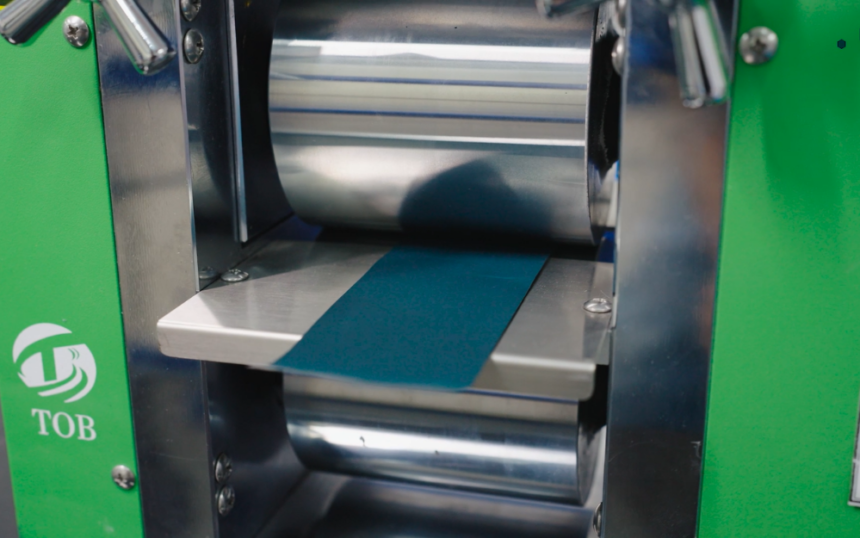
Macsen Energy’s work extends beyond cathode material supply. The company is developing Prussian White-based sodium-ion cell technology using Hard Carbon and other anode strategies. For stationary energy storage, the team is evaluating pouch and prismatic cell formats, with a focus on cost efficiency, higher active-material loading, reduced heat generation, and practical cycle life. The interview also outlined Macsen’s intention to validate its cell technology through a pilot line and eventually offer licensable cell technology to battery manufacturers.
Other Key Topics Discussed
About the Publication
Battery Tech Online is an industry publication covering battery materials, manufacturing, applications, testing, and emerging energy-storage technologies.
Interested in Prussian White or Sodium-Ion Cell Development?
Macsen Energy welcomes discussions with battery manufacturers, energy-storage companies, research institutions, and strategic partners exploring Prussian White cathode materials and sodium-ion technology.