
Our Technology | Prussian White Cathode Material for Sodium-Ion Batteries
The global battery market is shifting toward a multi-chemistry future. As renewable power, grid stabilisation, and light mobility scale, the market needs battery technologies built on abundant, cost-aligned, and geographically resilient materials. Sodium-ion batteries (SIBs) answer this need. Sodium is over a thousand times more abundant in the Earth’s crust than lithium, costs a fraction as much per kilogram, and is evenly distributed across geographies, eliminating the supply concentration risks that constrain lithium.
How Prussian white works
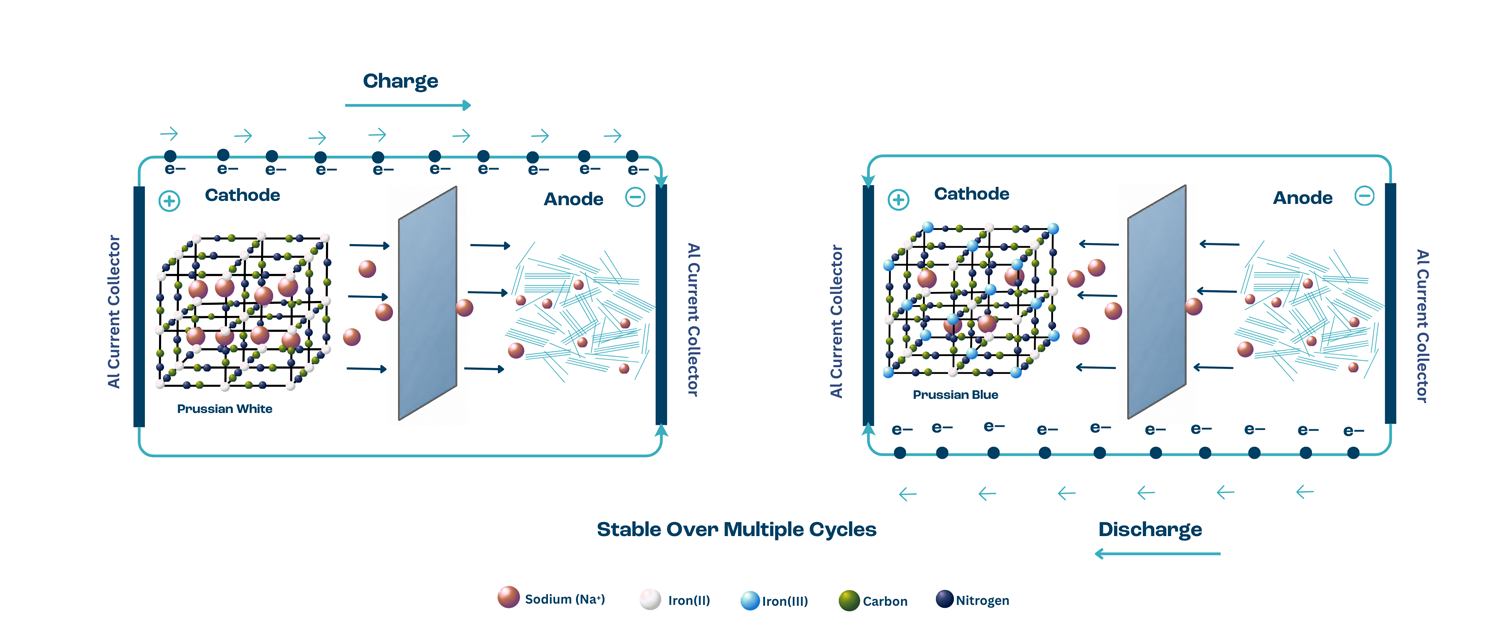
| Chemical / Structural Property | Relevance in Battery Application |
|---|---|
| Open framework | Allows fast ionic conductivity. |
| Non-oxygen framework | Enhances safety by lowering thermal runaway risk. |
| Structural stability of the framework | Ensures minimal volume change during cycling, maintaining capacity and extending battery life. |
| Iron, Nitrogen and Sodium-based composition | Low toxicity and sustainable material choice. |
| Compatibility with Aluminium current collector | Reduces overall cost and simplifies fabrication process. |
| Low-cost materials (Na, N, Fe) used in composition | High scalability and simple synthesis. |
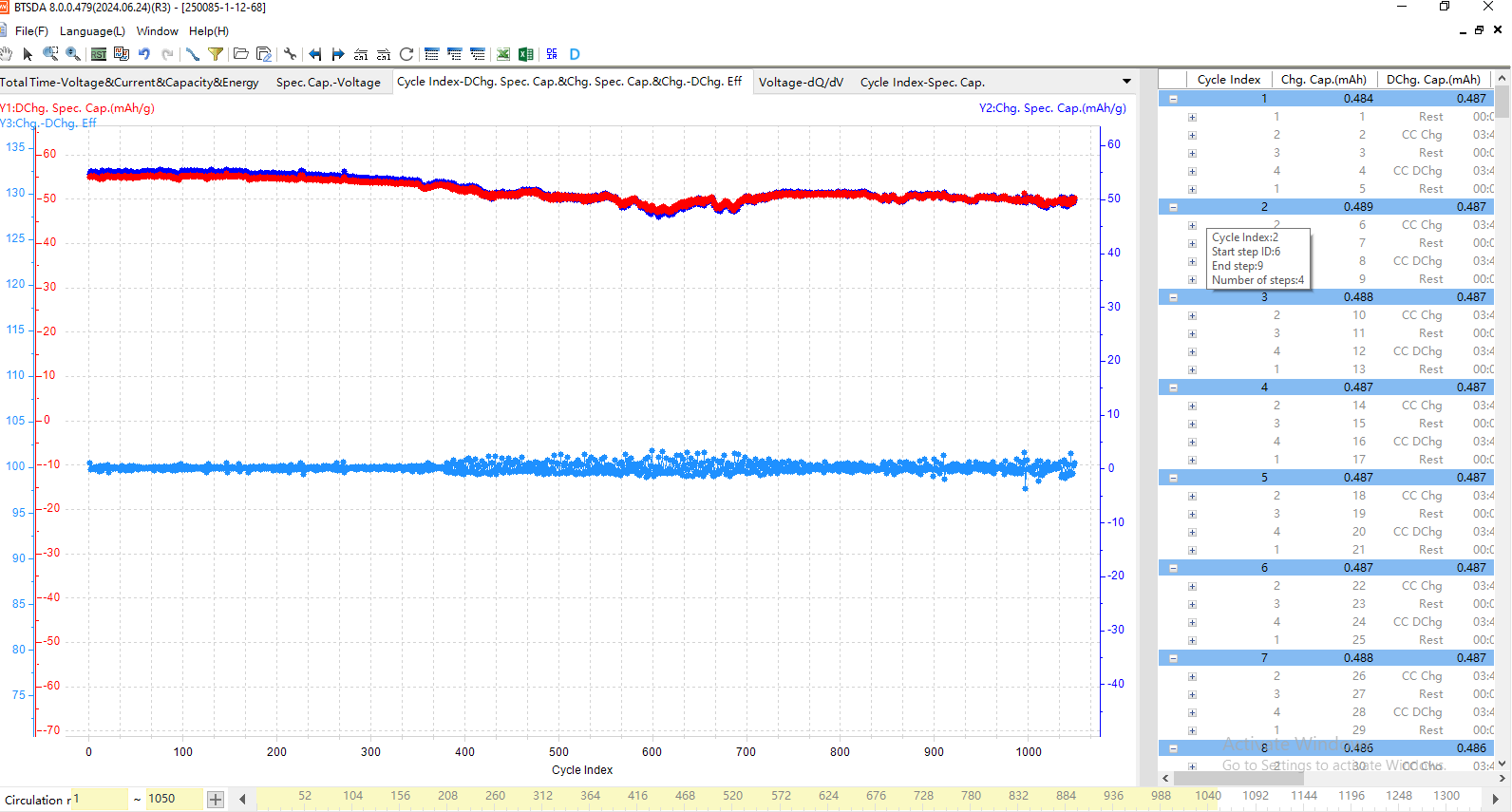
- Specific capacity: >150 mAh/g over 1000 cycles (on par with LFP)
- Coulombic efficiency: ~99.9%
- Cycling stability: Excellent reversibility across cycling, supported by Prussian White’s robust open-framework structure that undergoes minimal degradation over time.
- Air stability: Higher stability, which enables easy handling in commercial-scale production
Macsen’s Prussian White – Cell Performance
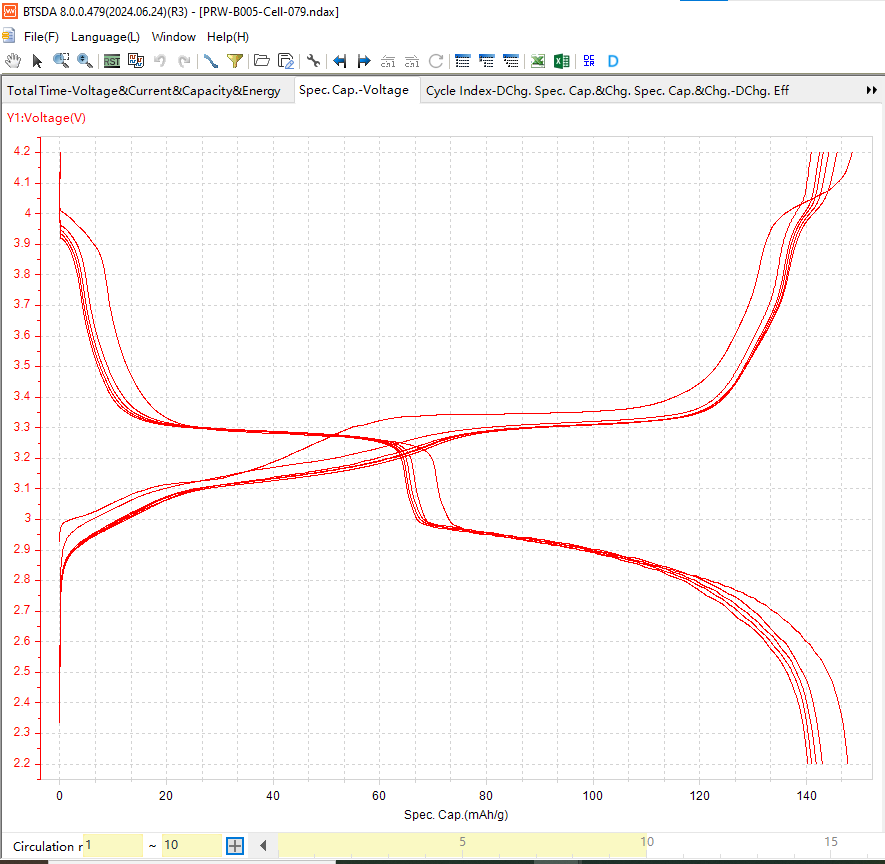
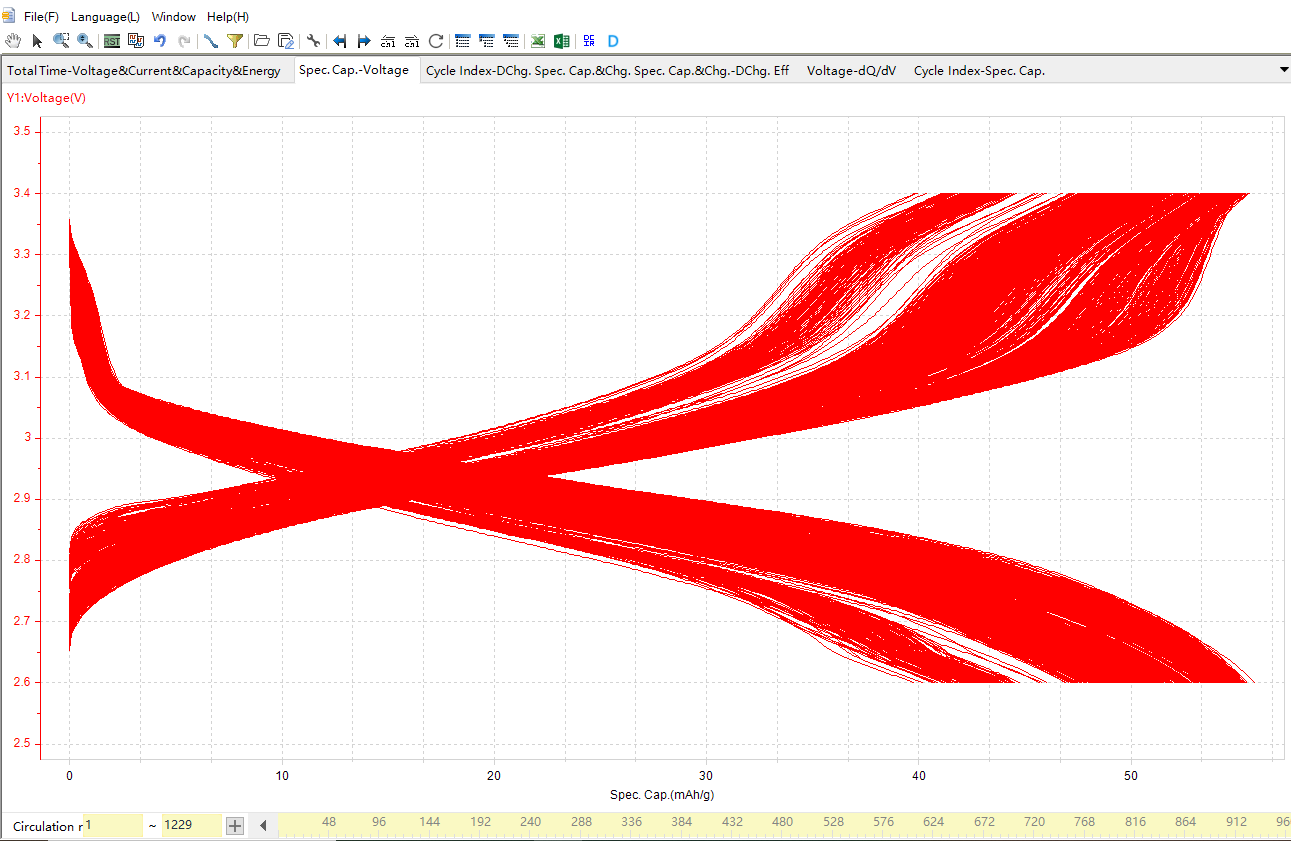
(Charge-Discharge Curve – Stable Electrochemical Performance over 1000 cycles with 90% capacity retention)
Macsen Energy operates an integrated battery R&D setup that supports the complete early-stage development cycle: material synthesis, inert handling, electrode preparation, cell fabrication, and electrochemical testing.
Laboratory capabilities –
- Chemical synthesis fume hoods
- Coating Machine for electrode coating
- Roll Press Machine for electrode compaction
- Vacuum Mixer for slurry preparation
- Coin Cell Crimper for half-cell assembly
- Electrode Punching Machine
- Argon-filled glove box for inert-atmosphere handling
- Muffle Furnace for high-temperature processes
- Ball Mill for material grinding
- Coin and pouch cell fabrication stations
- Vacuum dryers
- Electrochemical testing systems, including a Galvanostatic cycler and potentiostats
- Advanced analytical instruments including HPLC, LC-MS/MS with PDA, GC-MS/MS with Headspace, UV-Vis Spectrophotometer, ICP-OES, ICP-MS, and FTIR
- Grid and stationary energy storage - Battery energy storage systems (BESS) for grid stabilisation, solar energy storage, distributed stationary storage and renewable energy applications.
- Electric mobility - 2-wheelers, 3-wheelers, auto-rickshaws, city buses, and entry-level EVs, where sodium-ion's cost and safety profile align with India's volume mobility segments.
- Industrial and backup power - Rural microgrids, telecom and data centre backup, and industrial vehicles such as forklifts and warehouse loaders. Sodium-ion cells offer a structural safety advantage here; unlike lithium-ion, they can be transported in a fully discharged state.
- Household and commercial backup- Inverter systems, home backup systems, small commercial power backup, and Residential solar storage, where reliability, safer operation, and cost efficiency are important.
- Emerging and custom energy systems- Macsen Energy is open to custom material development for specific sodium-ion cell formats, chemistries, and application requirements.
- Macsen Energy has allocated 10,000 sq meters of land for a dedicated scale-up facility for Prussian Blue Analogue cathode materials and a pilot line for cell fabrication. The facility will support the transition toward tonne-level production capacity. Construction of this facility is planned to begin in 2027.
- In 2027, Macsen Energy also plans to establish a sodium-ion battery pilot line within the same site to further optimize Prussian White-based cell technology. This setup will support electrode preparation, cell assembly, full-cell validation, process reproducibility, and performance testing under conditions closer to commercial manufacturing.
- Macsen Energy has also initiated Hard Carbon synthesis R&D to strengthen its full-cell development program.
Go deeper into the chemistry
Evaluating Prussian White for your application?