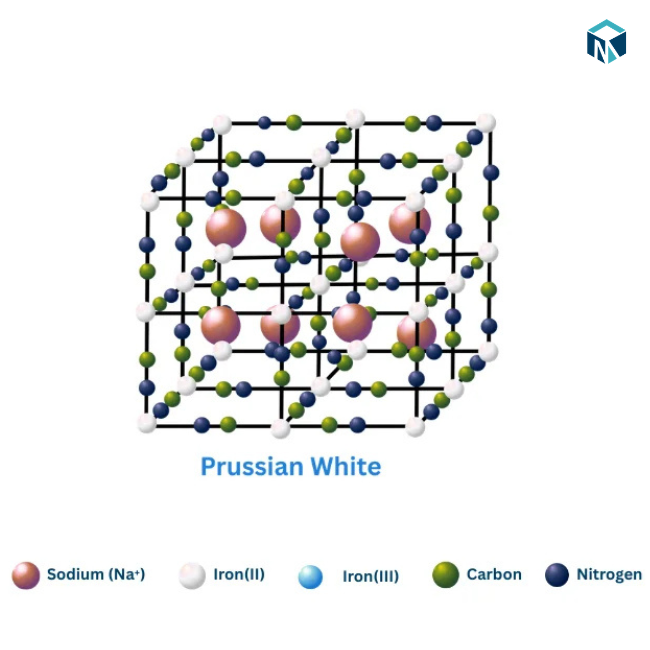
Prussian White (Na₂Fe[Fe(CN)₆]), also known as sodium iron hexacyanoferrate, is a promising cathode active material (CAM) for next-generation sodium-ion batteries (SIBs). Belonging to the Prussian Blue Analogue (PBA) family, it is the fully reduced, sodiated form of Prussian Blue and functions as the positive electrode material in a sodium-ion cell. Its open three-dimensional crystal framework allows rapid and reversible sodium-ion insertion and extraction with limited structural strain during battery cycling.
With its potential for high rate capability, long cycle life, and cost-effective production, Prussian White is gaining attention as a cathode material for stationary battery energy storage systems (BESS), including grid-scale and renewable energy storage, industrial energy storage, and light electric mobility applications.
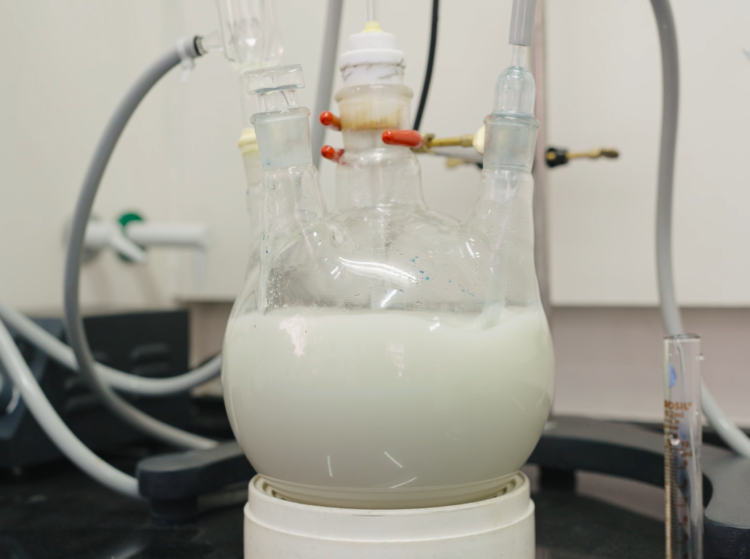
Macsen Energy is an Indian manufacturer and supplier of High-quality Prussian White cathode active material. Our proprietary single-step synthesis process produces highly sodiated, crystalline Prussian White with emphasis on purity and consistency. Material synthesis, characterization and electrochemical testing are supported by our integrated Battery R&D Lab and pilot-scale manufacturing facility.
In July 2025, a provisional patent application was filed for Macsen’s synthesis process (IN20241196121A).
Physical & chemical Properties
| Product Name | Prussian White Powder |
|---|---|
| CAS No | 897920-00-2 |
| IUPAC Name | Sodium Iron Hexacyanoferrate |
| Synonyms | Berlin White, Everett’s Salt, PW, Prussian White Analogue, PBAs |
| Elemental Composition | Na 14.33%, Fe 36.83%, C 22.03%, N 23.83% |
| Molecular Formula | Na₂Fe[Fe(CN)₆] |
| Molecular Weight | 314 g/mol |
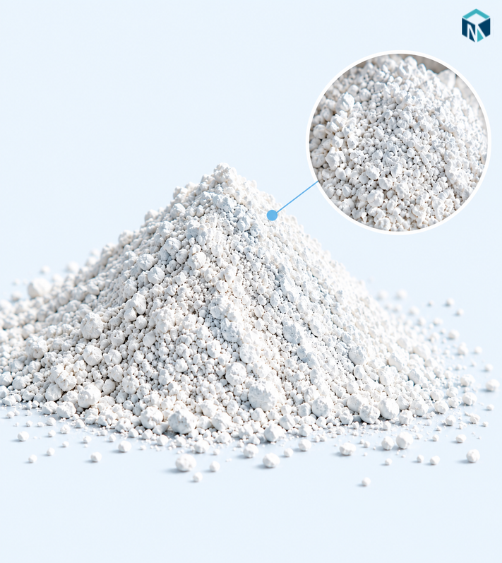
| Appearance | White Colour Powder |
| pH | 7.3 |
| Density | 0.6 g/cm³ |
| Particle Size Distribution | D10: 2.812 μm D50: 4.502 μm D90: 6.767 μm D100: 9.43 μm |
| Storage | Stored at Room Temperature, Should be used in Inert Atmosphere |
| Structure | Open 3D Framework Enables Facile Na⁺ Intercalation |
|---|---|
| Theoretical Capacity | ~155–170 mAh/g |
| Specific Capacity | >150 mAh/g over 1000 cycles (on par with LFP) |
| Coulombic Efficiency | ~99.9% |
| Operating Voltage | 2.2–4.0 V |
| Average Discharge Voltage | ≈2.5–3.6 V |
| Intercalation Properties | Fast, reversible Na⁺ insertion/extraction through large interstitial sites |
| Volumetric Stability | Excellent dimensional stability during cycling |
| Cycle Life | ≥90% capacity retention Over thousand cycles |
| Key Advantages | Low cost, high safety, fast Na⁺ diffusion, aqueous scalable synthesis |
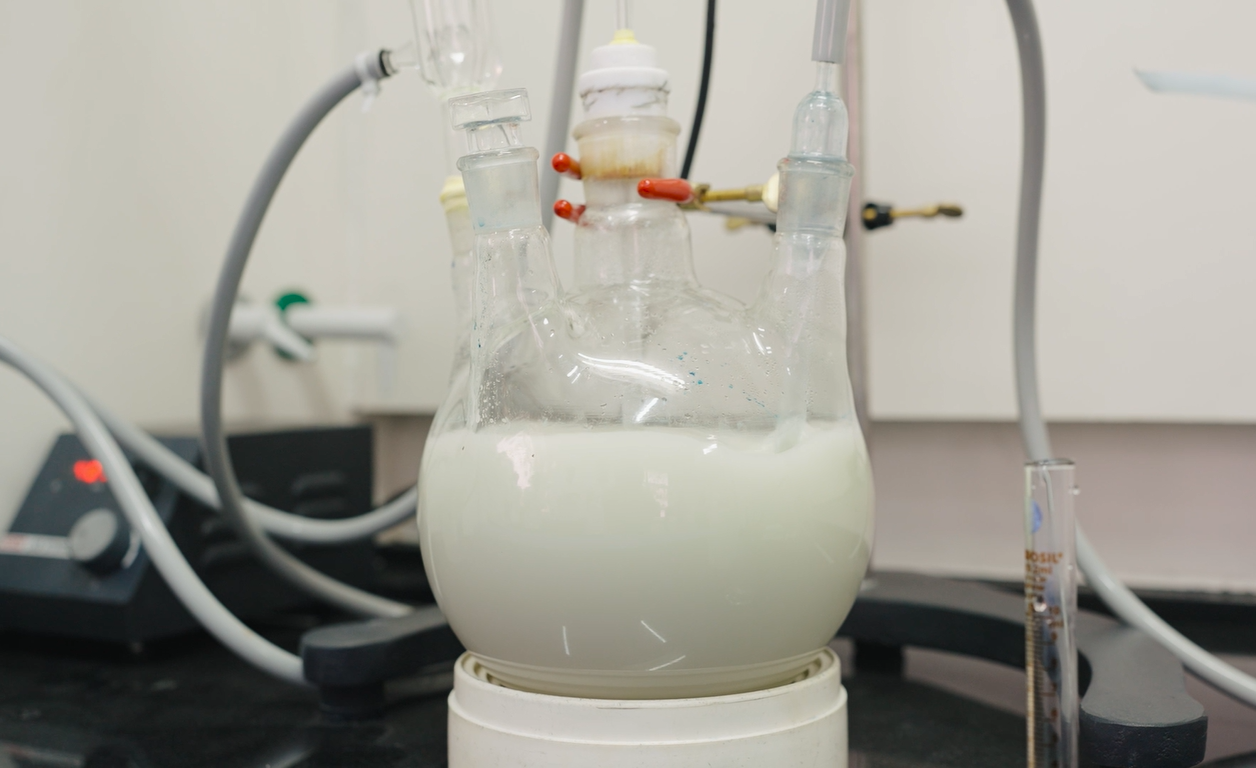
Macsen has developed a novel single-step, single-vessel synthesis process that addresses the key challenges that have earlier limited Prussian White to laboratory-scale production, namely, moisture sensitivity, oxygen exposure, and scalability constraints.
Iron-Based Chemistry
High Air Stability
Low Water Content
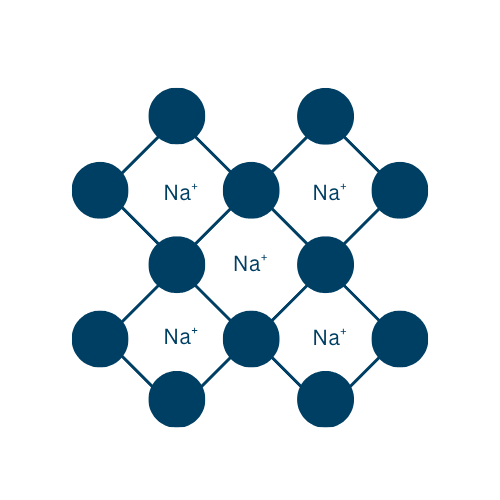
Highly Crystalline & Fully Sodiated
Electrochemical Performance
Scalable Proprietary Manufacturing Process
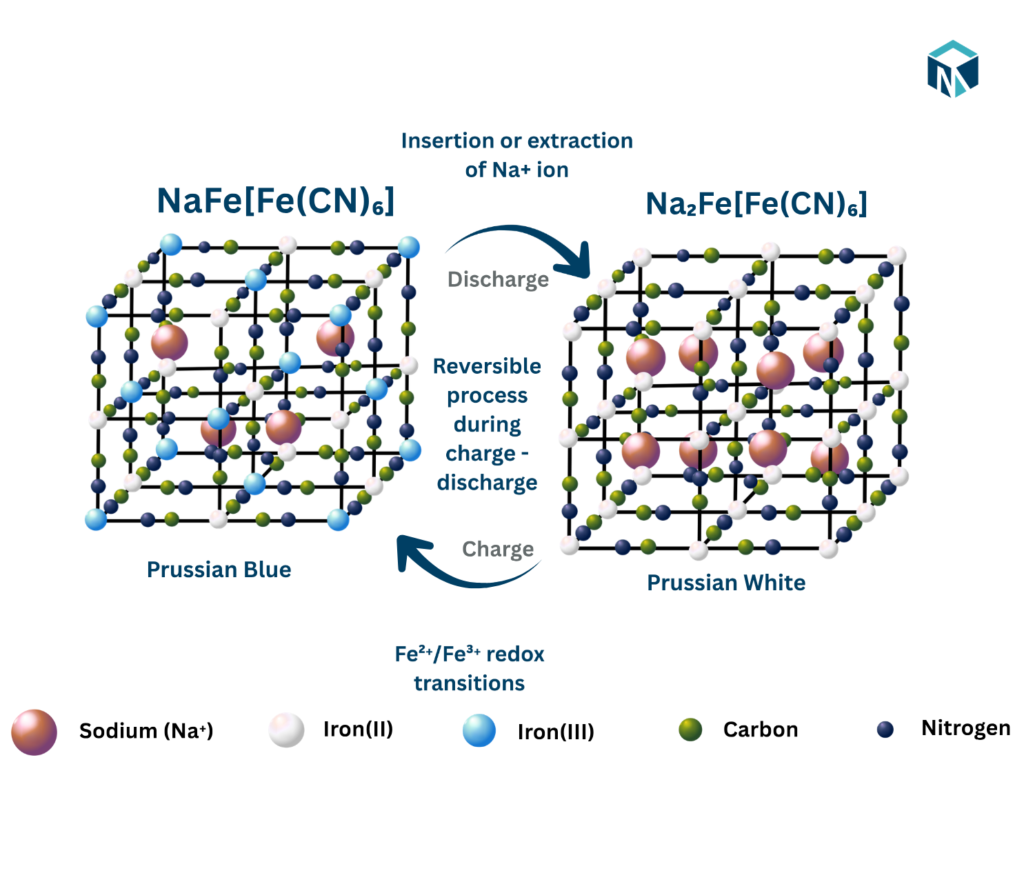
Prussian White has a three-dimensional open-framework crystal structure formed by iron centres linked through cyanide (–C≡N–) bridges. This structure enables rapid and reversible sodium-ion (Na⁺) intercalation and extraction during battery cycling.
During charging, Na⁺ ions move from the Prussian White cathode through the electrolyte to the anode (typically hard carbon). Iron undergoes oxidation from Fe²⁺ to Fe³⁺, shifting the cathode towards the less-sodiated Prussian Blue state.
During discharging, Na⁺ ions return to the cathode while electrons flow through the external circuit. Iron is reduced from Fe³⁺ to Fe²⁺, restoring the sodium-rich Prussian White state.
The ability of iron to readily switch between Fe²⁺ and Fe³⁺ oxidation states allows the reversible redox process to repeat over thousands of cycles, enabling efficient energy storage and supporting high rate capability and long-term cycling stability in sodium-ion batteries.
Prussian White is a promising cathode material widely used in advanced sodium-ion battery technologies and large-scale energy storage systems due to its high specific capacity and excellent cyclability. It is emerging as a cost-effective alternative to lithium iron phosphate (LFP) batteries for stationary energy storage and selected mobility applications due to its low cost and non-toxic chemical composition, making it a sustainable solution in battery technology. Its elemental composition of Na, Fe, C, N, Mn, and Ni is earth-abundant and free from geological constraints, which also supports its availability for commercial and industrial applications.
Grid-Scale Energy Storage & Battery Energy Storage Systems (BESS)
Residential & Commercial Power Backup Systems
Electric Mobility & Electric Vehicles (EVs)
Industrial & Renewable Energy Storage
Go deeper into the chemistry
Download our Prussian White concept paper for the full technical case – synthesis, mechanism, comparative performance, and cost economics.
Evaluating Prussian White for your application?
Speak directly with our R&D and commercial team for material supply, joint development, or complete cell technology partnerships.
Frequently Asked Questions (FAQs)
What is Prussian White used for?
Prussian White is a cathode active material (CAM) used in sodium-ion batteries, with potential applications in battery energy storage systems (BESS), light electric mobility and renewable energy storage.
What is the difference between Prussian White and Prussian Blue?
Prussian Blue (Berlin Blue, Brandenburg Blue, Parisian Blue or Paris Blue) is an inorganic complex salt formed by the oxidation of ferrous ferrocyanide salts. Prussian White (PW) is the fully reduced, sodium rich analogue of Prussian Blue, widely used in sodium-ion batteries (SIBs) as a cathode active material.
What is the specific capacity of Prussian White?
The theoretical specific capacity of Prussian White is around 170 mAh/g. Actual capacity is dependent on the material composition, sodium content, electrode formulation and test conditions.
Why is Prussian White a cost-effective cathode material for sodium-ion batteries?
The use of abundant, inexpensive materials like sodium and iron with Prussian White provide material cost benefits and less reliance on critical metals.
Where to buy Prussian White?
Buy high quality Prussian White cathode material for sodium-ion batteries, grid-scale energy storage and electric vehicles from Macsen Energy, a leading manufacturer and supplier in India that has developed its proprietary process for producing Prussian White CAM.